

Last updated: April 27, 2026
Quick Answer: Apples are one of the most widely grown and consumed fruits in the world, with over 7,500 known varieties cultivated across six continents. They offer strong nutritional value, remarkable culinary versatility, and a long shelf life that makes them practical for everyday use. Whether eaten fresh, baked into desserts, or pressed into cider, apples remain a staple ingredient in kitchens worldwide.
Key Takeaways
- 🍎 There are more than 7,500 apple varieties globally, though fewer than 100 are grown commercially at scale.
- Apples are a good source of dietary fiber, vitamin C, and polyphenol antioxidants.
- The best apple for a recipe depends on its sugar content, acidity, and how it holds up to heat.
- Apples store well: refrigerated at 30–35°F (−1 to 2°C), most varieties last 1–3 months.
- Common apple-growing regions include the United States (Washington State), China, Europe, and New Zealand.
- Apples ripen from late summer through late autumn, depending on the variety.
- Organic and conventionally grown apples both have nutritional merit; washing thoroughly reduces surface residues on either type.
- Pairing apples with fats (cheese, nut butter) or proteins slows sugar absorption and extends satiety.
What Exactly Are Apples and Where Do They Come From?
Apples (Malus domestica) are a pome fruit in the rose family, originally domesticated in Central Asia thousands of years ago. Today, China produces the largest share of the global apple crop by volume, followed by the United States, Turkey, and Poland.
The fruit spread westward along ancient trade routes, and European colonists later introduced cultivated varieties to North America. Modern commercial apple production relies on grafting — attaching a cutting from a desired variety onto a rootstock — to ensure consistent fruit quality across harvests.
Key origin facts:
- Wild ancestor: Malus sieversii, still found in the mountains of Kazakhstan
- Domestication: estimated 4,000–10,000 years ago
- Introduction to North America: 17th century via European settlers
How Do Apple Varieties Differ From Each Other?
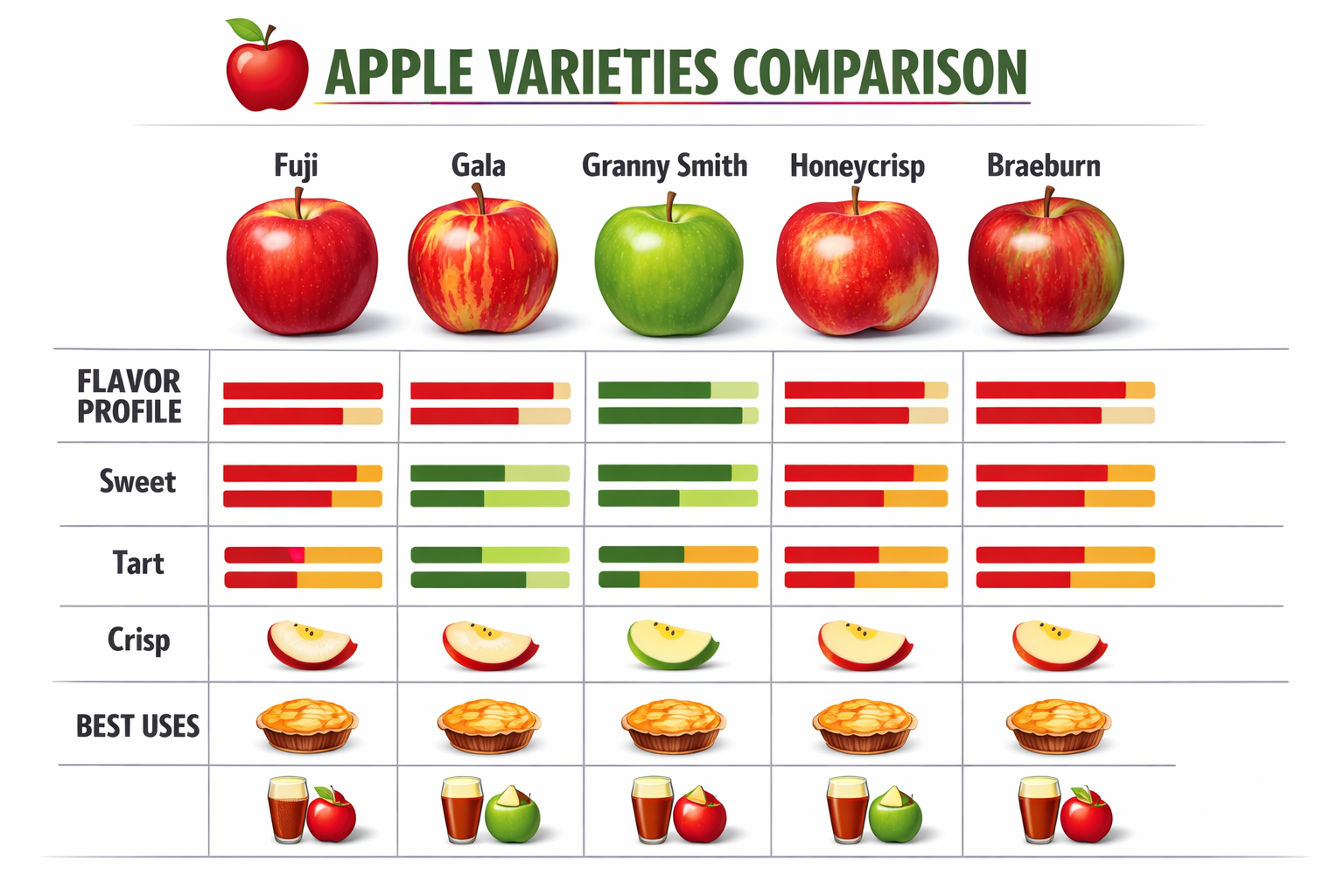
Different apple varieties vary by flavor (sweet vs. tart), texture (crisp vs. soft), color, size, and how they behave when cooked. Choosing the right variety for the right purpose makes a noticeable difference in results.
Popular Apple Varieties at a Glance
| Variety | Flavor Profile | Best Use | Season |
|---|---|---|---|
| Fuji | Very sweet, dense | Snacking, salads | Late autumn |
| Gala | Mildly sweet | Snacking, applesauce | Late summer |
| Granny Smith | Tart, firm | Baking, pies | Autumn |
| Honeycrisp | Sweet-tart, juicy | Snacking, salads | Early autumn |
| Braeburn | Spicy-sweet | Baking, cooking | Autumn |
| Golden Delicious | Mild, soft | Applesauce, baking | Autumn |
| McIntosh | Tart, tender | Cider, sauce | Early autumn |
| Pink Lady | Tart-sweet, crisp | Snacking, cheese boards | Late autumn |
Choose Granny Smith or Braeburn if baking a pie — their firm flesh holds shape and their tartness balances added sugar. Choose Fuji or Honeycrisp for raw eating or salads where texture and sweetness matter most.
“Not all apples are interchangeable. Using a soft, sweet variety like McIntosh in a tart will produce mush; using Granny Smith in applesauce will need more sweetener.”
What Nutritional Value Do Apples Provide?
A medium apple (about 182g) provides roughly 95 calories, 25g of carbohydrates, 4g of dietary fiber, and 14% of the daily recommended value for vitamin C, according to USDA nutritional data. Apples are also a source of potassium and polyphenol antioxidants, including quercetin and catechin.
Nutritional highlights per medium apple:
- Fiber: Supports digestive health; most fiber is in the skin
- Vitamin C: Contributes to immune function and skin health
- Quercetin: A flavonoid linked to anti-inflammatory properties in research
- Calories: Moderate, making apples a filling snack relative to their energy content
Common mistake: Peeling apples before eating removes a significant portion of the fiber and antioxidants. Leaving the skin on maximizes nutritional benefit.
Apples have a low-to-moderate glycemic index (around 36–40), meaning they raise blood sugar more slowly than many processed snacks. Pairing an apple with nut butter or cheese further slows glucose absorption.
How Should Apples Be Stored to Last Longer?
Apples store longest when kept cold, humid, and away from other produce. The ideal storage temperature is 30–35°F (−1 to 2°C) with 90–95% relative humidity — conditions a standard refrigerator crisper drawer approximates reasonably well.
Storage tips:
- Keep apples in a perforated plastic bag in the refrigerator crisper
- Store away from vegetables like carrots and broccoli — apples emit ethylene gas, which accelerates ripening in nearby produce
- At room temperature, most apples last only 1–2 weeks before softening
- Refrigerated, firm varieties like Fuji and Granny Smith can last 2–3 months
- Cut apples brown quickly due to oxidation; toss with lemon juice or store in cold water to slow browning
What Are the Best Ways to Cook With Apples?
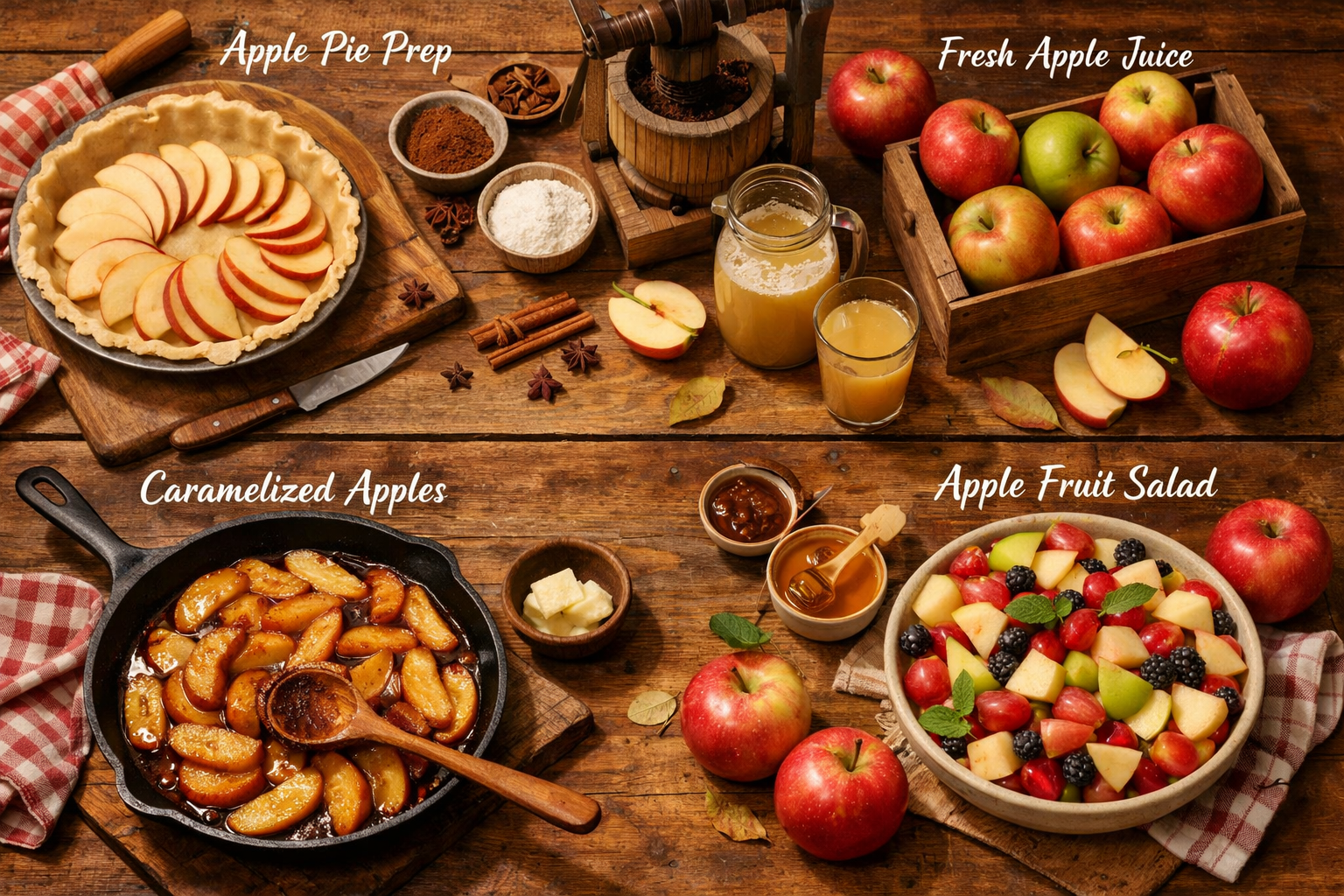
Apples are among the most versatile fruits in the kitchen, working equally well in sweet and savory applications. The key is matching variety to method.
For a wide range of mouth-watering apple recipes, the options span from simple weeknight sides to elaborate baked goods. A dedicated apple cookbook is also a practical resource for anyone wanting to go deeper into apple-forward cooking.
Sweet Applications
- Pies and tarts: Use firm, tart varieties (Granny Smith, Braeburn) that hold shape under heat
- Applesauce: Soft varieties (McIntosh, Golden Delicious) break down easily without much added liquid
- Crisps and crumbles: Any variety works; mixing two (one sweet, one tart) adds complexity
- Caramelized apples: Fuji or Honeycrisp hold shape while developing deep flavor in butter and brown sugar
Savory Applications
- Pork dishes: Apple’s natural acidity cuts through fatty pork; try sliced apples roasted alongside a pork loin
- Salads: Thinly sliced Honeycrisp or Pink Lady adds crunch and sweetness to grain or green salads
- Chutneys and relishes: Tart apples cooked down with vinegar, onion, and spices make excellent condiments — similar in technique to fruit compote preparations
- Cheese boards: Crisp, tart varieties complement aged cheddars and blue cheeses well
If you enjoy exploring seasonal and celebratory food traditions, the National Pie Day guide covers apple pie as one of the most classic American pie varieties worth celebrating.
Are Apples Good for Health Diets and Specific Eating Plans?
Apples fit into most mainstream eating plans, including low-fat diets, Mediterranean-style eating, and high-fiber plans. They are naturally gluten-free, fat-free, and sodium-free.
Diet compatibility:
- Low-calorie diets: At roughly 95 calories per medium apple, they’re a filling, nutrient-dense snack
- High-fiber diets: One apple provides about 14–17% of the daily fiber target for most adults
- Low-glycemic diets: The fiber content moderates blood sugar response
- Paleo and whole-food diets: Fresh apples are fully compatible
- Ketogenic diets: Apples are higher in carbohydrates (around 25g per medium fruit) and are generally limited on strict keto plans
Edge case: Individuals with fructose malabsorption may experience digestive discomfort from apples, particularly from varieties higher in fructose. Smaller portions or cooking the apple (which partially breaks down fructans) can help.
For those interested in low-carb approaches, resources like the Dr. Atkins dietary framework address how fruit fits into carbohydrate-restricted eating.
How Are Apples Used Beyond Fresh Eating and Baking?
Apples are processed into a wide range of products beyond fresh fruit and baked goods:
- Apple cider and juice: Pressed from multiple varieties blended for flavor balance; hard cider is fermented
- Apple cider vinegar: Fermented apple juice with culinary and food preservation uses
- Dried apples: Sliced and dehydrated for snacking or adding to trail mixes and cereals
- Apple butter: Slow-cooked applesauce reduced to a thick, spreadable concentrate
- Pectin: A natural gelling agent derived from apple skins and cores, widely used in jams and jellies — including marmalade production
Apple-based beverages also pair well with other drink preparations. For creative apple-forward punch and drink ideas, the 400 refreshing punch recipes collection offers a broad range of options.
What Are Common Mistakes When Buying and Using Apples?
Buying mistakes:
- Choosing apples based on appearance alone — a shiny apple isn’t necessarily fresher than a matte one
- Buying more than can be used within the storage window, leading to waste
- Ignoring variety labels when a recipe specifies a type
Cooking mistakes:
- Using sweet, soft varieties in pies (results in mushy filling)
- Skipping the lemon juice step when preparing cut apples ahead of time
- Over-sweetening applesauce made from naturally sweet varieties
Storage mistake: Leaving apples in a fruit bowl next to bananas accelerates ripening for both — bananas emit high levels of ethylene gas.
Conclusion: Getting the Most From Apples in 2026
Apples reward a small amount of attention. Knowing which variety to choose for which purpose, how to store them properly, and how to use both skin and flesh fully makes a real difference in flavor, nutrition, and reducing waste.
Actionable next steps:
- Stock two varieties at home: one firm-tart (Granny Smith) for cooking, one sweet-crisp (Honeycrisp or Fuji) for snacking.
- Refrigerate apples in a crisper drawer, away from ethylene-sensitive vegetables.
- Leave the skin on whenever possible to preserve fiber and antioxidants.
- Explore savory uses — apples in pork dishes, salads, and chutneys are underused and highly rewarding.
- Try a new recipe using the apple recipe collection at Still Cooking or browse a dedicated apple cookbook for structured inspiration.
Frequently Asked Questions
Q: How many apple varieties exist? Over 7,500 apple varieties have been identified globally, though fewer than 100 are grown at commercial scale. In most grocery stores, you’ll encounter 10–15 varieties regularly.
Q: What is the healthiest apple variety? No single variety is definitively “healthiest,” but darker-skinned apples (Red Delicious, Arkansas Black) tend to have higher antioxidant concentrations in the skin. For fiber, any variety eaten with skin provides meaningful benefit.
Q: Can you freeze apples? Yes. Peel, core, and slice apples before freezing. Toss with lemon juice to prevent browning. Frozen apples work well in cooked applications (pies, crumbles, applesauce) but become soft when thawed and are not ideal for fresh eating.
Q: Why do cut apples turn brown? Browning is caused by oxidation — enzymes in the apple flesh react with oxygen when the cell structure is broken. Coating cut surfaces with lemon juice, orange juice, or cold water slows this reaction significantly.
Q: Are apple seeds toxic? Apple seeds contain amygdalin, which can release small amounts of cyanide when metabolized. However, the quantity in a typical apple’s seeds is far too small to cause harm from casual consumption. Eating large quantities of crushed seeds repeatedly would be a concern, but swallowing a few seeds accidentally poses no real risk.
Q: What is the difference between apple cider and apple juice? Fresh-pressed apple cider is unfiltered and unpasteurized (or lightly pasteurized), giving it a cloudy appearance and fuller flavor. Commercial apple juice is filtered, pasteurized, and often has a longer shelf life and clearer appearance. Hard cider is fermented apple juice with an alcohol content typically between 4–8%.
Q: When is apple season? Most apple varieties ripen between late summer (August) and late autumn (November) in the Northern Hemisphere. Cold storage allows apples to be sold year-round, but peak fresh flavor and local availability occur in autumn.
Q: Do organic apples taste better than conventional? Taste differences between organic and conventional apples are not consistently documented in research. The primary reasons consumers choose organic apples relate to pesticide residue concerns. Washing any apple thoroughly under running water reduces surface residues on both types.
References
[1] Apple iPhone News April 2026 – https://blog.mean.ceo/apple-iphone-news-april-2026/ [3] New Apple Products iPhone iPad Mac Watch – https://www.macworld.com/article/671090/new-apple-products-iphone-ipad-mac-watch.html [4] Apple Event – https://www.macrumors.com/guide/apple-event/